Writing, reviews, interviews, photography.

A Brief History of American Craft

Posted on March 4, 2013

DSC_4001

Editor’s Note: Dan Zubrzycki is a writer/consultant/jack-of-all-trades gentleman currently living in Philadelphia. He will be writing a series on the history of American craft for us over the next several weeks. You can see his most recent article for us about Frank & Oak by clicking here.

America itself was a work of craftsmanship.  Forged by ambitious idealists, tempered in it’s own flaws, it’s bolts, nails, and stitching are the uninhibited hopes and dreams of those that built the first rough-hewn cabins.  But the concept of craft has had a strange journey.  In this series of articles I’m going to give a bit of thought to craftsmanship in America – ranging from looking at historical contexts as well as modern attitudes and applications.

But first, I’d like to take a look at a brief overview of it’s history in the US.

America’s first colonists were craftsmen out of necessity.  A craftsman is distinguished from a tradesman for the quality of what they create.  Living on the frontier or in the nascent towns of early America, everything you produced had to be top of the line.  With general stores only capable of selling basic supplies, craftsmen contributed to society by providing top of the line supplies. As America matured and became increasingly industrial, craft returned to a place of luxury where it stayed through the Great Depression.

The culmination of industrialization in WWII created a ubiquity in ownership.  To be American was to own products similar to those everyone else owned. We sought to align ourselves with patriotism – and dissociate ourselves with communism – by buying products which branded themselves as American.So began the modern struggle between individualism and a corporate attempt to monetize.  Through the 60’s and 70’s, mass market producers battled minor revolutions.  A brief craft beer movement is crushed by Anheuser Busch, the music industry is officially capitalized, image based advertising is essentially invented.

The uneducated consumer is born.  Market research drives popular music and film, art is constructed, craft abandoned.  While ubiquity doesn’t quite hold sway as it did before, brand allegiance does.  While all hope seems lost, that darkness paves the path towards a craft revolution.

Then, moving into the 90’s, a spark is lit.  The children of the 70’s coming to age, the rise of the internet – but mass production starts to lose it’s appeal.  The concept of ethical consumerism not only arrives on the scene, but also gains massive support.  We’re now living in an era where adherence to large brands seems a faux pas, and a constant pursuit for the next niche is lauded.

This is the modern American craft scene – inhabited by passionate artisans, fueled by the democratization of the internet, and driven by savvy consumers.  Knowledge and skill  have replaced brand identity, which allows for us to feel unified by a common intellectual goal, to support passion over profit.  We’ll continue to follow this idea, and flesh out concepts proposed in this first article, weekly.
American Trench Wool Herringbone Socks

Posted on February 26, 2013

american-trench-socks

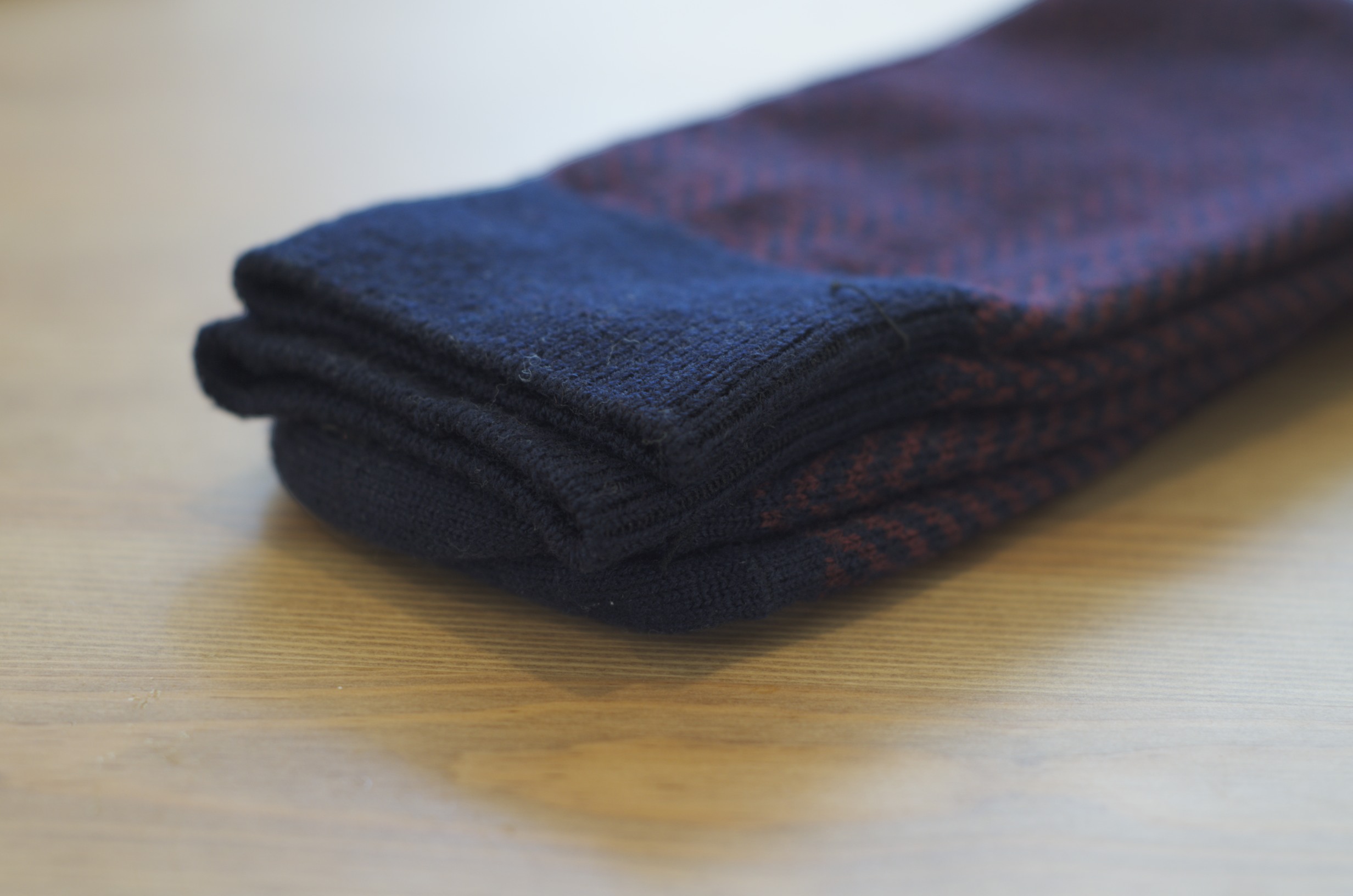
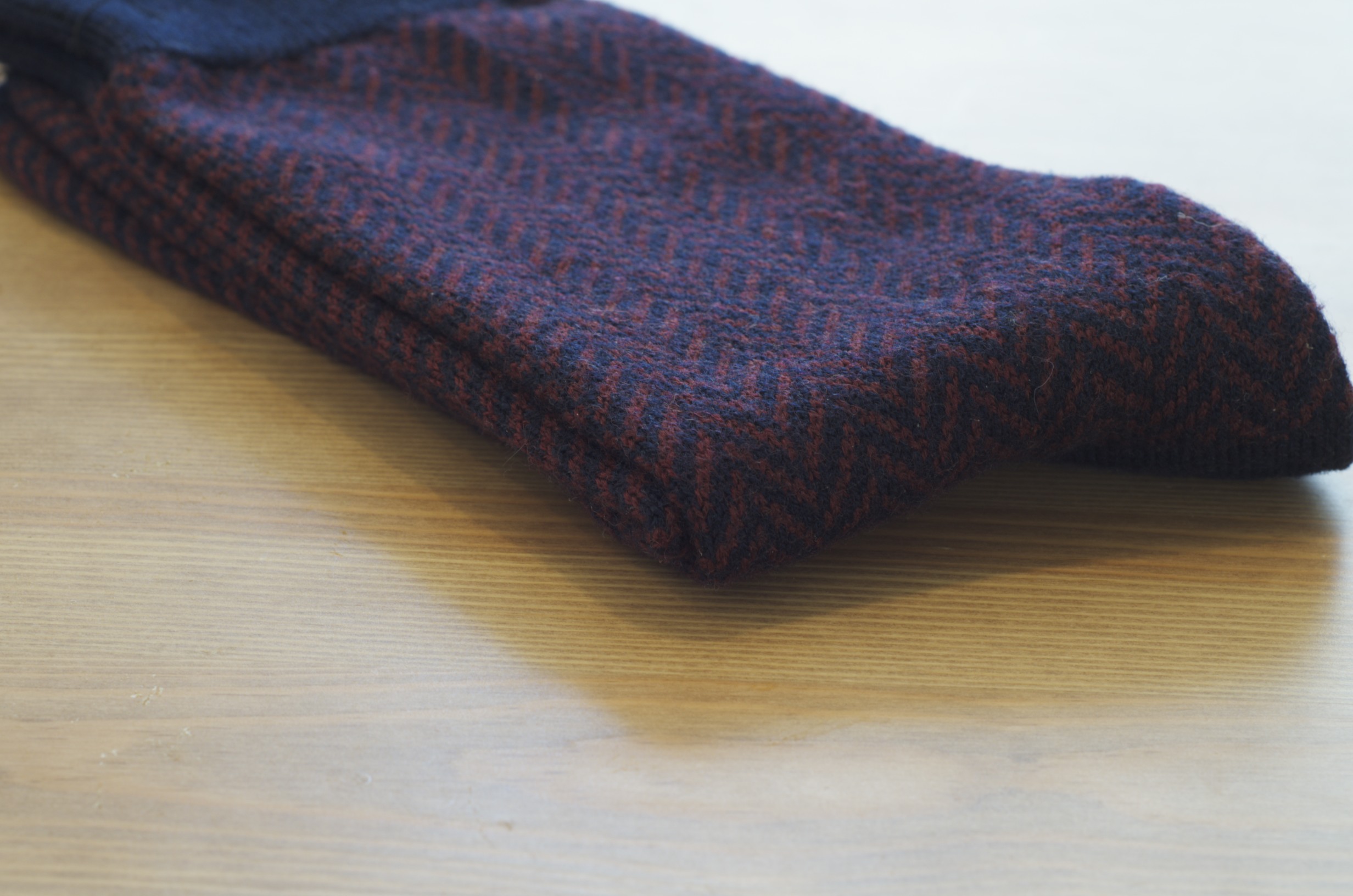
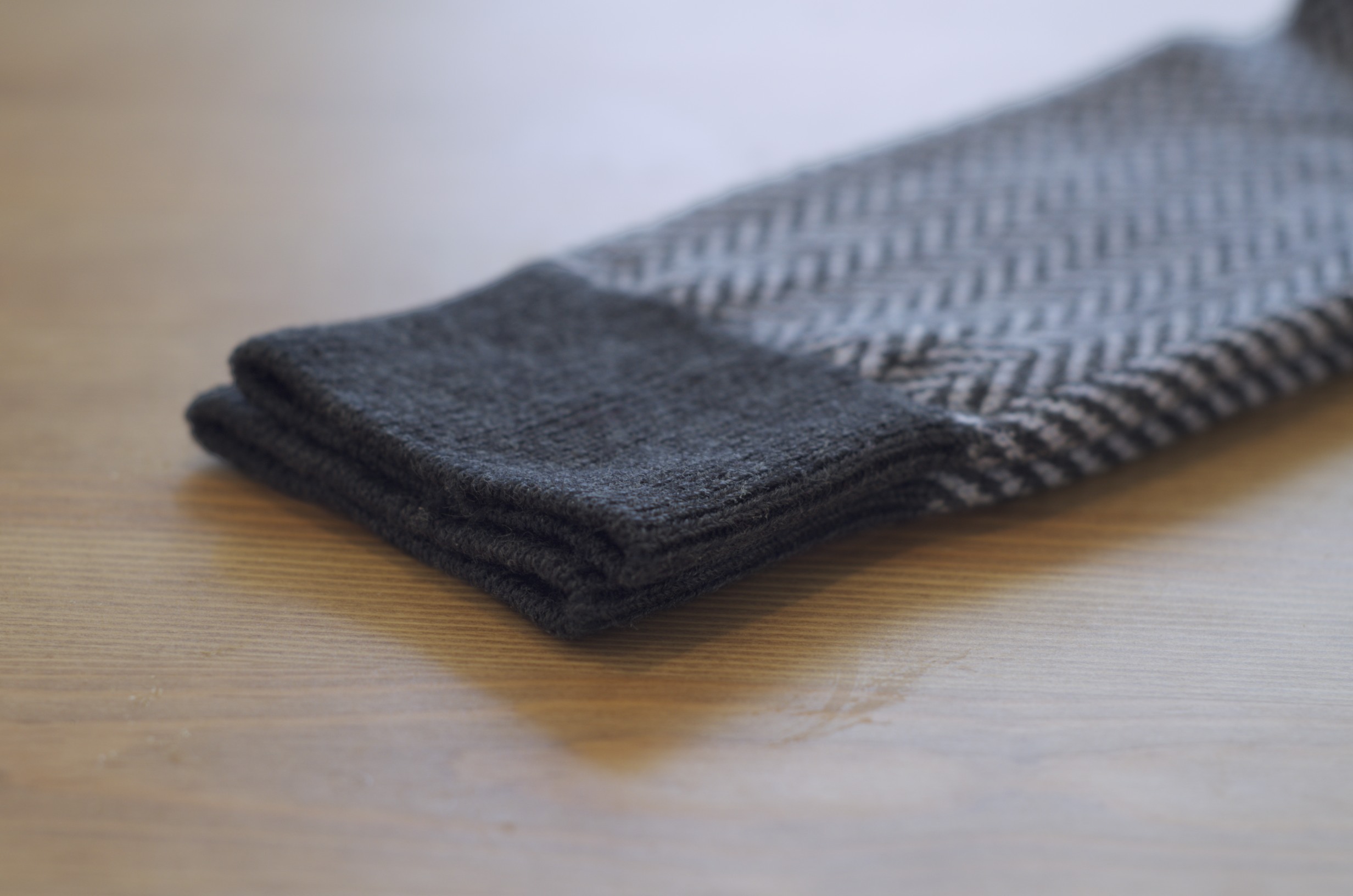
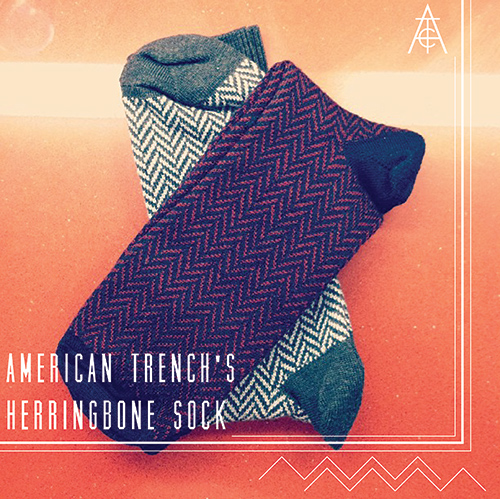
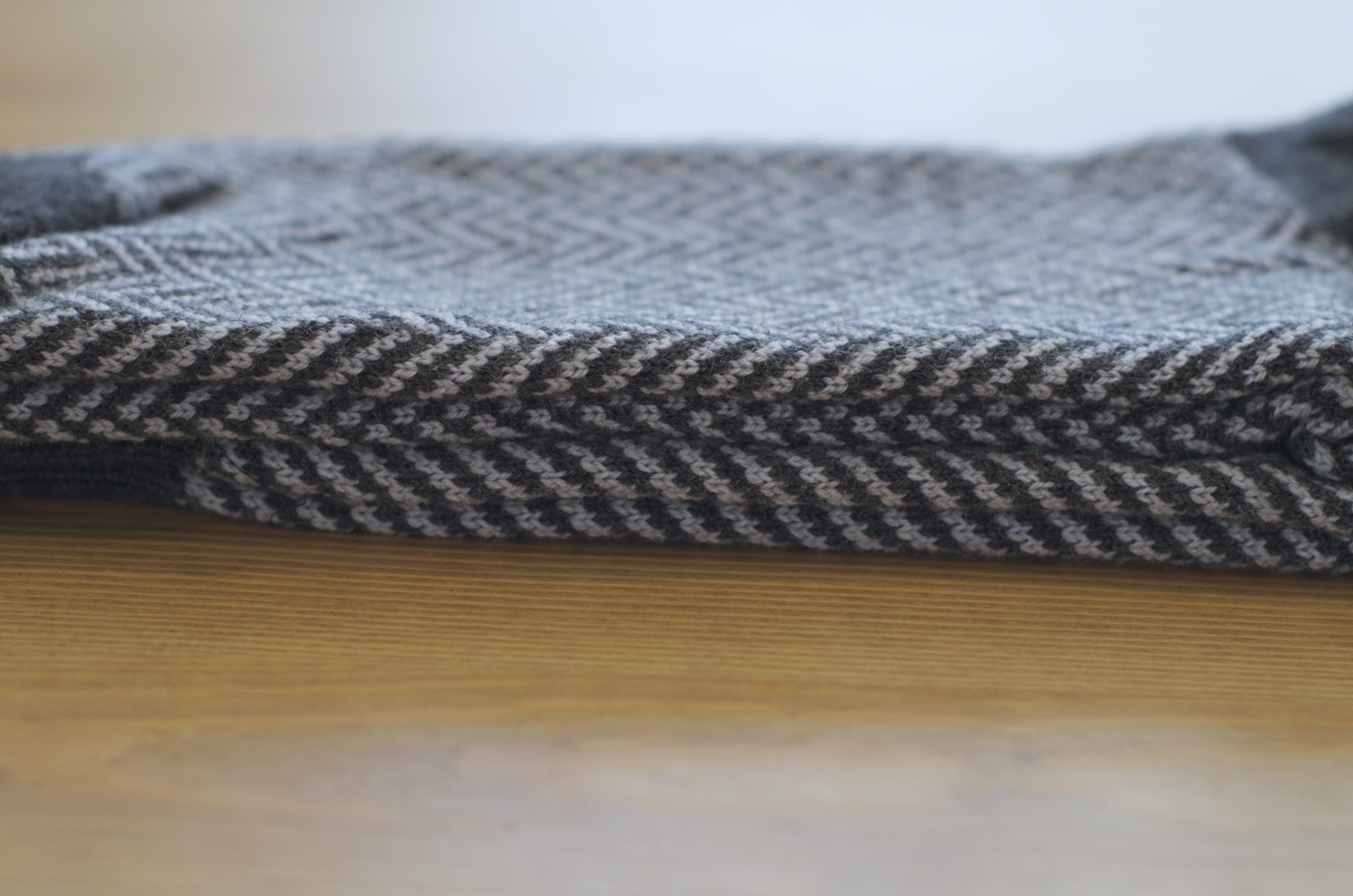
I’ve never written a review for socks before but I figure these are a pretty good first pair to talk about. American Trench has socks, in addition to their namesake trench coat, and man are they cool. They’ve got a few different types, some more universally useful than others, but today we’ll be talking briefly about their wool herringbone ones. If you’re not familiar with the Philadelphia based company, I suggest you become acquainted as soon as possible.

DSC_3913 DSC_3916

Socks are pretty simple when it comes down to it. There isn’t much to the anatomy of one and most components are rather self explanatory (toe, heel, etc.), though a term you probably haven’t heard is “gusset”. The “gusset” is the triangular piece that holds the leg and foot portion of the sock together. There’s your vocab word for the day. I had to dig for that one.

DSC_3927 DSC_3920 DSC_3915

These socks are a little heavier in weight; I’m enjoying them in our fall-like temperatures here in Southern California and I’m certain that the rest of you toiling away in a snowy existence would find these quite comfortable as well. They’re unbelievably soft and thus far have been a total joy to pair with breaking in some new boots. They’re not terribly thick; they don’t remind me of my ski socks I wear under my Red Wings when I visit family and friends in the midwest and East coast, but they’re not summer weight socks either. When you’ve gotta have socks and you want something a bit classier with some heft, here’s your pair. Definitely better looking than my usual go-to smart wools.

Pair these with some wingtips or your dress-shoe of choice and something that fits your color scheme and you’ve got a winning sock combo. They come in three shades, a navy/red pair (pictured), a light/dark grey (pictured), and a dark grey/red/black.

They currently retail for $27. You can purchase these socks from American Trench directly by clicking here.

The Battle Royale of the American Made Shirt: Vol. 3 (Finale)

Posted on February 19, 2013

volume 3 finale

Welcome to Volume 3 of the Battle Royale of the American-Made Shirt. The idea behind this article started with a simple purchasing conundrum; there are plenty of great brands out there and with a few parameters set forth, how can we really narrow down what shirt is the best for our needs as a consumer? Our rules were simple:

  1. We wanted a shirt that would appeal to the masses, though showcased each company’s best effort, that fit the average cut guy very well.
  2. The shirt had to be made in the United States of America.
  3. If it could be helped, the shirt had to be under $200.00

After doing research, this proved to be far more difficult than we had anticipated. When it comes down to it, many brands aren’t familiar with the origins of their fabric or didn’t make the shirts themselves. Most of our favorites – the really distinctive patterns – were typically beyond the allotted price point. You will see that we did make a few exceptions along the way but stayed true to these rules for the most part. Most of the brands were quick to point out that in differentiating between most labels with the exception of a very select few American makers, all shirts are essentially the same. The variables are in the fabric and the cut with only slight variation in construction seen across the board. Once you’ve seen one shirt, you’ve seen most of them; or so it seemed.
We have taken the approach to looking at these shirts as someone who puts average wear on clothing with occasional days working in the field on creative projects and more frequent days sitting behind a desk. We tested all of these shirts and combined our opinions with those of the fit models who wore them for the photo shoots. The brands we will review in this volume are New England Shirt Co. (based in Fall River, MA.), Hamilton Shirts (based in Houston, TX.), and the unannounced newcomer Ratio Clothing. This is the final volume of this series of articles; the winner will be announced at the end. Click below to read the full article.

Field Trip: Tradesmen LA

Posted on January 22, 2013

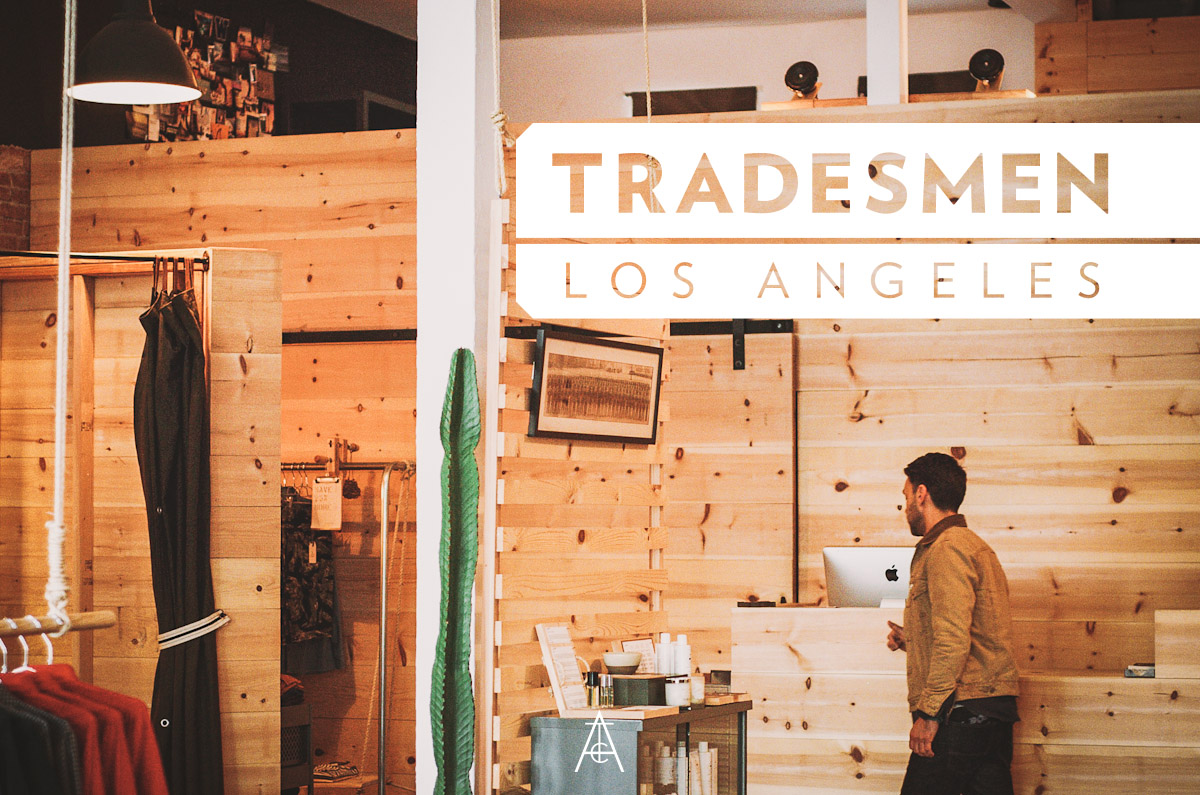
tradesmen_masthead_web

A few weeks ago I visited a mens lifestyle shop in Venice, CA. called Tradesmen LA. The shop has an amazing selection of Baldwin and Tellason Denim, all the Velva-Sheen products you’ve never seen for sale before, Ursa Major, Pendleton, Five Brother, Palmer Trading Co., Rogue Territory, Truman Handcrafted, and more. Do a quick search on some of the lesser known brands they carry and you’ll find that much of their stock cleans up in the Japanese market, making this shop even more of a find for the dudes of LA. This is the kind of place you go for top of the line wardrobe staples that you can dress up or down and feel comfortable wearing without reservation as the craftsmanship is just that great. Click here to read the full article.

DSC_3714 DSC_3713